
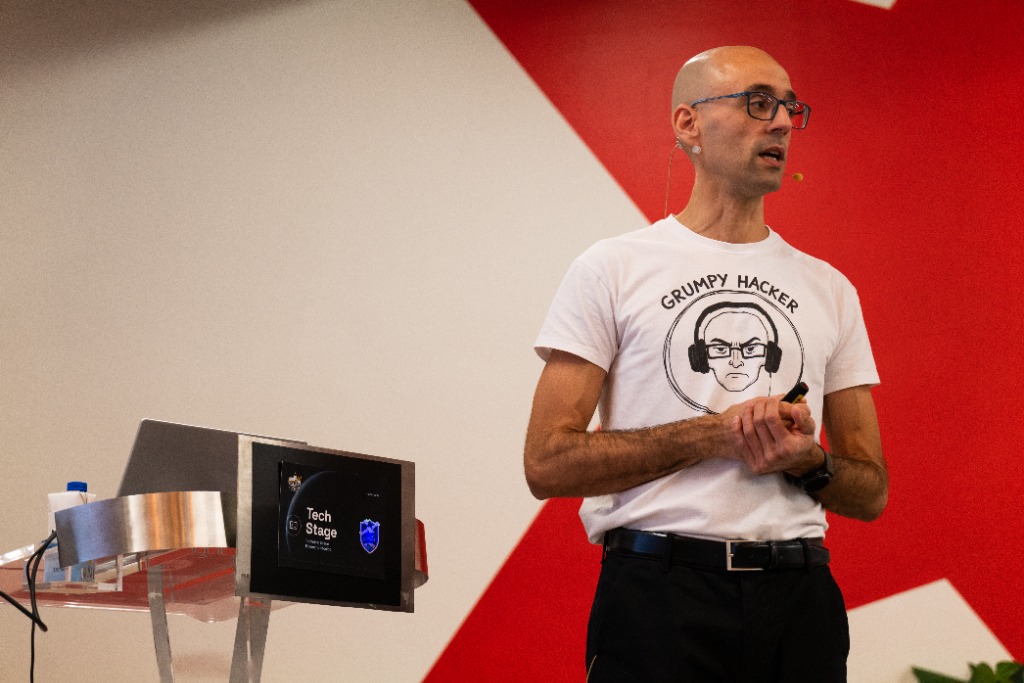
A few days ago, I had the pleasure of speaking at the inaugural edition of CYSAT Madrid 2026, organized by CYSEC and THE SIGN.MEDIA as part of Madrid Tech Week. The event brought together space agencies, European defense industry leaders, and security researchers at Digitaliza Madrid, including representatives from ESA, the Spanish Space Agency (AEE), TEDAE, Space ISAC, and the Cybersecurity Agency of the Community of Madrid.
Having spent over 12 years testing and breaking satellite communications systems, having this event at home meant a lot to me.
Space is no longer an isolated scientific domain; it is critical terrestrial infrastructure. When a SATCOM network or ground teleport goes down, maritime routes stall, defense communications blind, and financial timestamping fails.
12+ Years in SATCOM: What Has Actually Changed?
When my colleagues and I started publishing on SATCOM security back in 2014, demonstrating root takeovers on maritime deployments and commercial satellite terminals, the industry was caught off guard. Since then, the threat landscape has accelerated dramatically:
- SmallSat and CubeSat operators rely heavily on modular, open-source ground software (like OpenC3 COSMOS, Yamcs, and NASA cFS) that share the same common web and command injection vulnerabilities as any enterprise web server.
- Incidents like the KA-SAT wiper attack during the Ukraine conflict proved that commercial satellite terminals are prime targets in geopolitical operations.
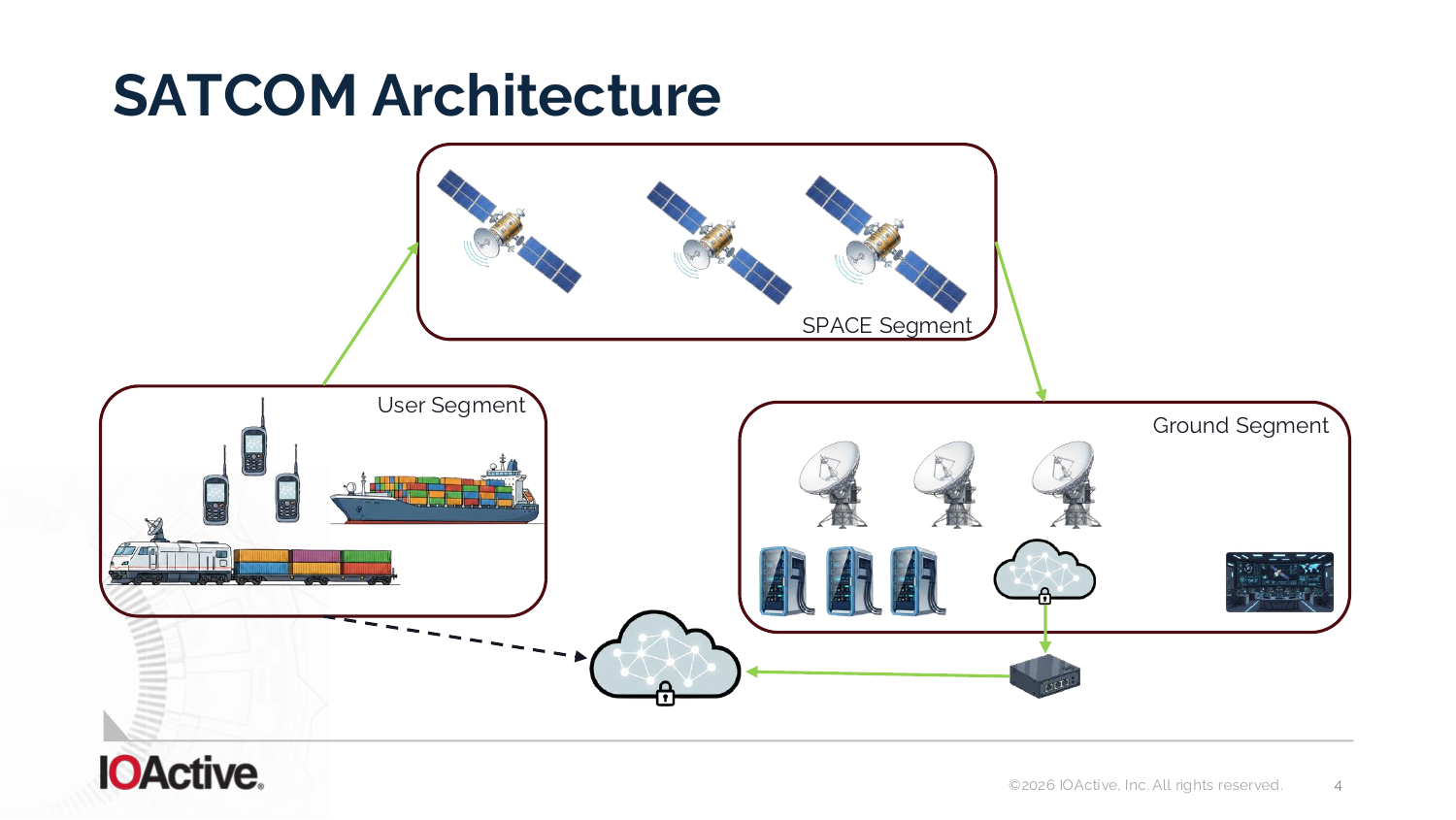
An attacker doesn't need to fly a rocket to hack a satellite. If you can compromise an unauthenticated terminal via off-axis side-lobe injection from the ground, or chain a command injection in mission control software, the entire network is exposed.
What I Presented, real world vulnerabilities
My talk focused on a fascinating real-world cryptographic vulnerability we uncovered in a widely deployed commercial SATCOM terminal ecosystem: Compromising a SATCOM Network by Leaking a Private Key.
The vendor had implemented an "encrypt-only" firmware update architecture:
- The physical devices in the field held an embedded private key to decrypt and apply incoming broadcast updates.
- The manufacturer held the corresponding public key on their build servers.
- Believing that the public key was sensitive, the vendor deliberately kept the public key private and never distributed it with the firmware.
The manufacturer's assumption was that because attackers didn't possess the public key , classic cryptographic attacks like Daniel Bleichenbacher’s famous million-message padding oracle against PKCS#1 v1.5 padding would be mathematically impossible. Without knowing the modulus and exponent , you cannot compute the blinded ciphertexts.
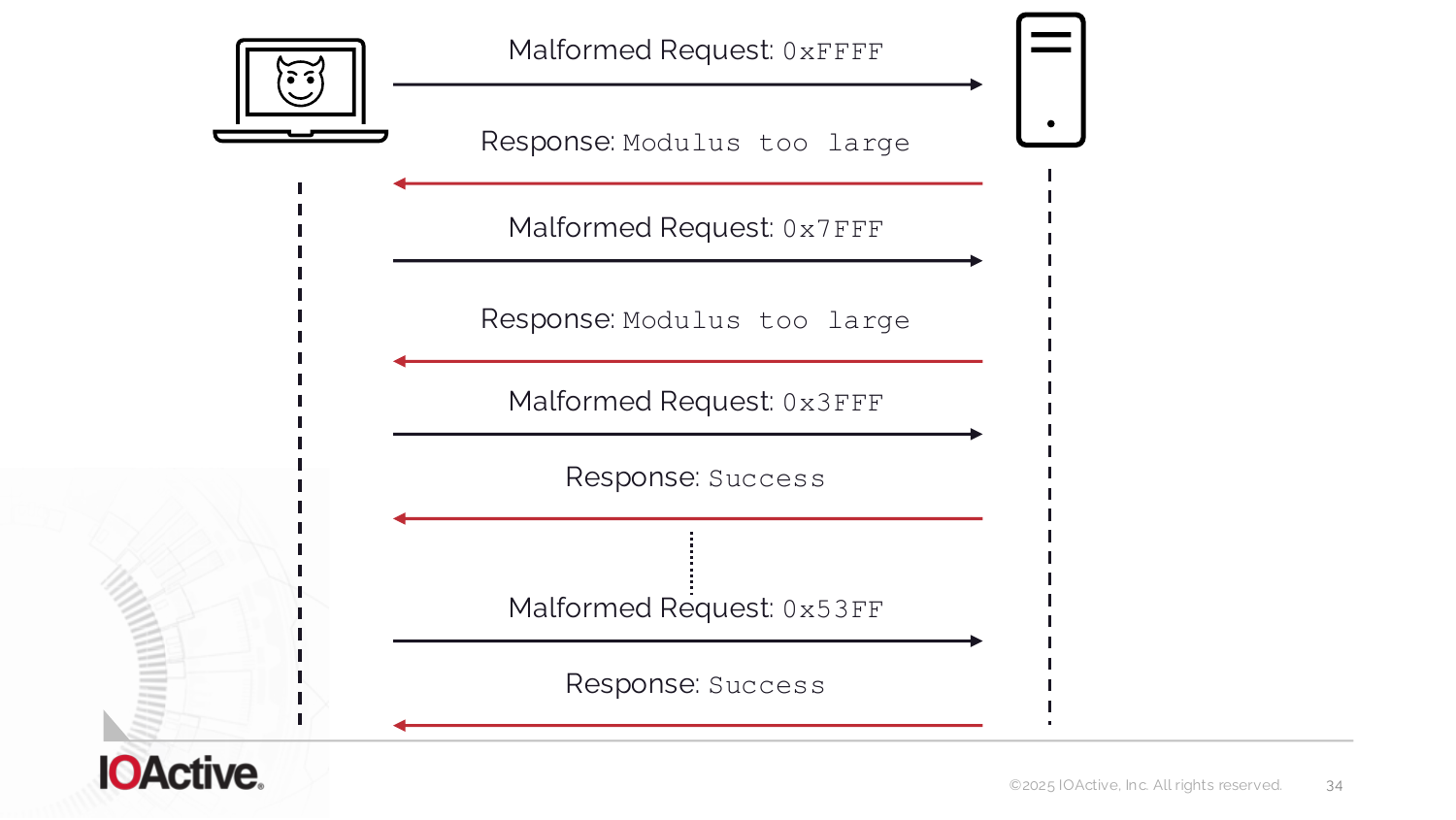
We proved that assumption wrong by discovering an unintended side-channel: an OpenSSL bounds-check error ("modulus too large") returned whenever an input integer exceeded the device's private modulus . That single error leaked an exact comparison oracle. Using a simple binary search algorithm over the network, we extracted all 2,048 bits of the unpublished RSA modulus in roughly 2,000 queries.
Once the modulus was reconstructed and paired with the standard exponent , we recreated the vendor's "non-public" public key, launched Bleichenbacher’s attack against the terminal's firmware decryption interface, and fully recovered the symmetric AES key used to protect updates across the entire global network.
Deep-Dive Technical Whitepaper
I covered the in-depth cryptographic mechanics, mathematical interval reduction proofs, and tooling for this attack in my IOActive research paper:
👉 Two Oracles to Get One Key: A tale of recovering a symmetric key from an encrypt-only firmware update scheme.
If you want to see the exact OpenSSL boundary logic and how the two oracles feed into each other, check out the full paper.
Where Space Cybersecurity Goes From Here
Conferences like CYSAT show that the space industry is finally realizing what the automotive and other industries learned the hard way a decade ago: compliance checklists do not equal security.
As thousands of satellites launch into Low Earth Orbit (LEO) and constellations become increasingly autonomous, securing the space domain requires rigorous, hands-on offensive testing.
Looking ahead, I am actively expanding my research in this area, so more real-world issues will be published!